

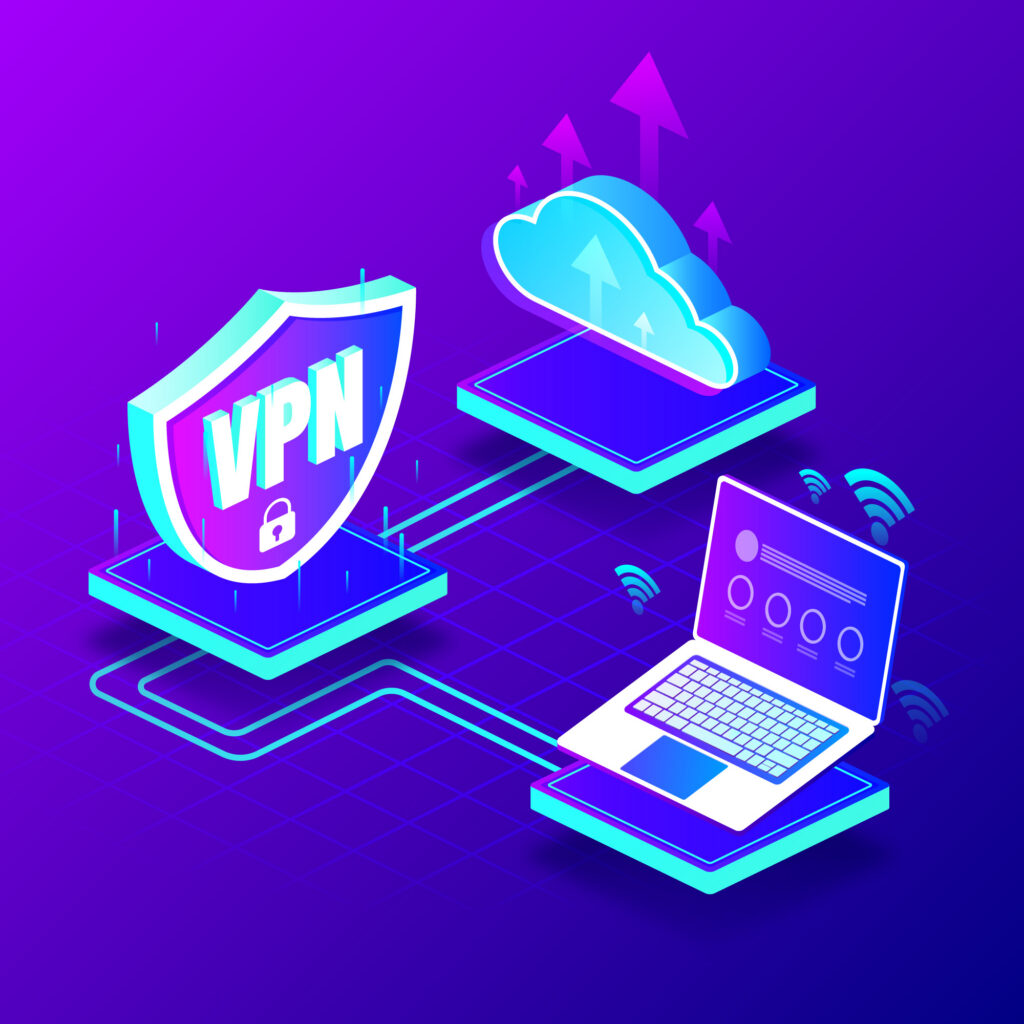
With hybrid work and the massive migration of workloads to the public cloud, infrastructure has become fluid and decentralized.
This new landscape has exposed the fragility of legacy VPNs (Virtual Private Networks), which were designed to connect users to a central office and now create performance bottlenecks, security risks due to excessive access, and serious visibility gaps.
To ensure network integrity, organizations are adopting Next-Generation Endpoint VPNs, which operate not only as encryption tunnels but also as intelligent security agents within a Zero Trust architecture.
The Failure of the “Traditional Perimeter” Model
Traditional VPNs are based on the concept of “implicit trust”: once a user authenticates and establishes the tunnel, they are considered an “internal” user and granted broad access to the corporate network.
In a hybrid cloud environment, this model is dangerous for three main reasons:
- Lateral Movement: If an endpoint is infected by ransomware or malware, the attacker can freely move through the VPN tunnel to reach critical servers and databases in the cloud or in the data center.
- Traffic Backhauling: Routing all traffic from a remote employee through the company’s gateway (hairpinning) creates unacceptable latency for SaaS and cloud applications, degrading the user experience.
- Lack of Context: Legacy VPNs do not distinguish between a managed corporate laptop and a suspicious personal device; the focus is solely on the tunnel, not the health of the device.
Anatomy of a Next-Generation Endpoint VPN
Next-Generation Endpoint VPN solutions incorporate advanced features that transform the endpoint into a security policy enforcement point.
1. Zero Trust Network Access (ZTNA) and Granular Access
Unlike a VPN that provides access to the entire network, a Next-Gen VPN (often integrated into ZTNA architectures) grants access based on the Principle of Least Privilege.
Users can only “see” and interact with the specific applications for which they have authorization, while the rest of the infrastructure remains hidden (the “Dark Cloud” concept).
2. Device Posture Check
Access is not granted based solely on a username and password. The Next-Generation VPN Endpoint assesses the endpoint’s status before any communication takes place:
- Compliance: Is the operating system up to date? Is the disk encrypted?
- Security Stack: Is the EDR (Endpoint Detection and Response) software running and reporting to the central console?
- Context: Is the access occurring from an atypical geolocation? Is the device known or is it a visitor?
3. Data Path Optimization (Cloud-Native Gateways)
Instead of backhauling, Next-Gen VPN uses a global network of edge gateways. User traffic is routed to the nearest point of presence (PoP), ensuring that access to cloud resources is direct, secure, and high-performance.
Remote Edge Defense Strategies with Next-Generation VPN Endpoints
To protect hybrid infrastructure, the Next-Generation VPN Endpoint operates at critical layers that eliminate the need for complex back-end networks.
A. Prevention of Lateral Movement
Through microsegmentation, the Next-Gen VPN restricts access not by subnets or VLANs, but by application tags. Even if an endpoint is compromised, the attacker is “trapped” in an isolated segment, with no visibility into other servers or devices on the network.
B. Adaptive Encryption and TLS 1.3
Using modern transport protocols, these VPNs offer robust encryption that reduces processing overhead, ensuring that communication between the remote user and the cloud is uninterrupted and protected against modern attacks, such as Man-in-the-Middle (MitM).
C. Continuous Monitoring and Automated Response
The session is monitored in real time. If the user’s behavior changes after authentication, the system can automatically revoke the session and notify the security operations center (SOC). This happens, for example, in the event of a massive data exfiltration initiated by a compromised account.
Technical Comparison: Legacy vs. Next Generation
| Feature | Traditional (Legacy) VPN | Next-Gen Endpoint VPN |
| Access Point | Centralized (Data Center) | Distributed (Edge/Cloud) |
| Visibility | Tunnel traffic only | In-depth visibility into endpoints and apps |
| Trust Protocol | Username/Password (static) | Zero Trust (continuous and contextual) |
| Performance | Latency due to backhauling | Optimized via CDN/PoPs |
| Segurança | Wide/Lateral | Granular/Segmented |
Tracenet’s Role in Your Security Transformation
The transition to Next-Gen Endpoint VPNs is not just a change in tools, but a strategic leap forward in cybersecurity maturity. Tracenet Solutions guides your organization through this process using a robust methodology:
- Attack Surface Assessment: Mapping how your users access resources today and identifying where the greatest exposure risks lie.
- Secure Hybrid Architecture: Implementing an access layer that unifies the security view across private and public clouds.
- Automation and Orchestration: Integrating the new VPN with your IAM (Identity and Access Management) and EDR systems to enable a nearly instantaneous incident response.
By investing in Next-Generation VPN Endpoints, your organization will no longer view remote access as a “necessary evil” but will instead treat it as a robust component of productivity and security, essential to the success of any modern business.
Ready to modernize your remote access?
Your company’s infrastructure cannot be the weakest link in your security chain. Contact the experts at Tracenet today.
We’ll conduct an assessment of your current architecture and design a transition plan to the Zero Trust access model, ensuring top-tier performance and absolute protection for your distributed workforce.